You’ve checked the diaper, offered a feeding, rocked them in your arms, and walked laps around the living room. Then, almost by accident, your baby notices a floating balloon left over from a birthday party—and suddenly, they’re quietly staring at it.
As a balloon manufacturer, we’ve heard stories from customers who purchased our Bubble Balloon™ or ibrex balloons™ saying that their babies stopped crying or smiled while watching them. Although these are personal experiences rather than scientific evidence, they have sparked curiosity about what many now call the “balloon trick.”
Here’s what we know, what we don’t know, and how to try the balloon trick safely if you already have a balloon at home.
Can Balloons Help Babies Stop Crying?
There are very few scientific studies showing that balloons help babies stop crying. However, according to the National Library of Medicine, babies often cry because of basic emotions or sensations, including discomfort, fear, sadness, or overstimulation, or changes in their environment,
As babies adjust to a fast-changing world, certain visual distractions may briefly capture their attention. While balloons are not a proven soothing method, some parents report that they can temporarily distract a crying baby.
Why Might Babies Be Interested in Balloons?
Based on healthychildren.org, newborns first see light, shapes, and faces during the early weeks of life. By around 3 months, babies become better at focusing on faces and nearby objects. By 4 months, they can see colors and different shades of them.
Several characteristics of balloons overlap with what researchers know about infant visual development.
By around:
- 3 months: babies become better at focusing on faces and nearby objects.
- 4 months: they can distinguish colors more clearly and often become interested in colorful objects.
1. Gentle movement
By around 3 months, many babies begin tracking slow-moving objects with their eyes.
Because helium balloons drift slowly rather than moving quickly like many electronic toys, some babies may find them easier to watch.
2. Bright colors
By around 4 months of age, babies become better at distinguishing colors and often show increased interest in visually interesting patterns and objects.
A brightly colored balloon naturally stands out in the room, making it something many babies may want to look at.
3. Shiny reflections
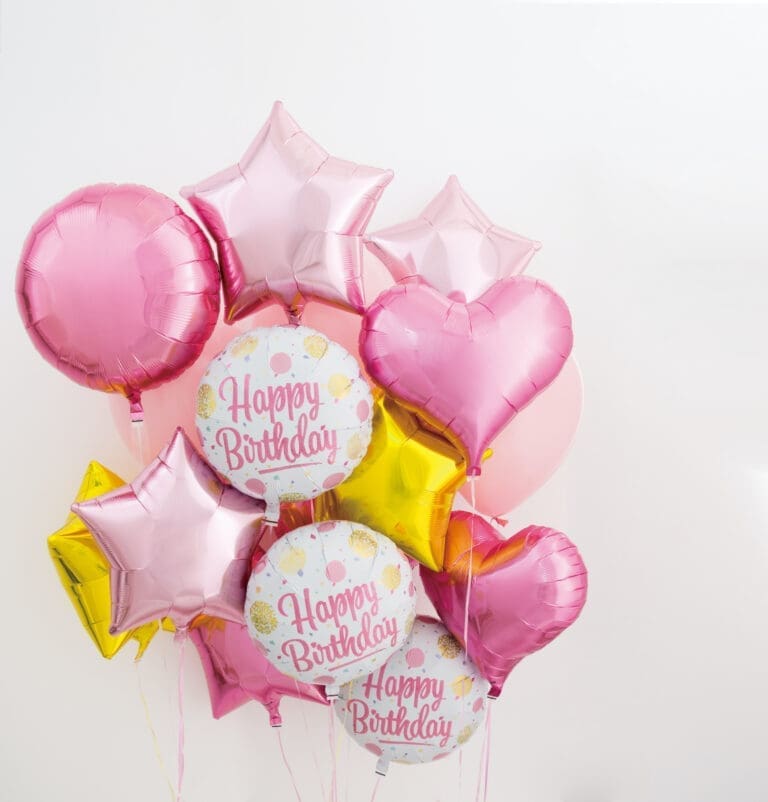
Foil balloons constantly reflect light, windows, and movement around the room.
Because these reflections change as the balloon moves, they create a constantly changing visual experience that some babies appear to enjoy.
Is the Balloon Trick Safe?
Yes – and no. Balloons themselves are generally safe when used responsibly, but they are not designed as baby toys, so several precautions are important.
1. Never leave your baby alone with a balloon
Latex balloons can become a choking hazard if they pop or if a baby manages to put them in their mouth. Even small balloon fragments can block a child’s airway.
For this reason, babies should always be supervised around balloons. Some parents choose Mylar (foil) balloons because they do not break into small stretchy pieces like latex balloons, although they still require adult supervision.
2. Be careful with the strings
Keep balloon strings out of your baby’s reach. Strings should never be close enough for babies to grab, chew, or wrap around their hands, fingers, or neck. Always keep balloons at a safe distance.
It’s important to remember that crying is your baby’s way of communicating.
Before trying any distraction, first check your baby’s basic needs, including:
- Hunger
- A wet or dirty diaper
- Fatigue
- Being too hot or too cold
- Gas or physical discomfort
- The need for comfort or physical closeness
6 Balloon Tricks that may Help During a Crying
Here are some balloon tricks you can try with your baby.
1. Left-and-Right Tracking
Move the balloon slowly from left to right. Your baby may stop crying for a moment while following the balloon with their eyes.
2. Sunlight Reflection Trick
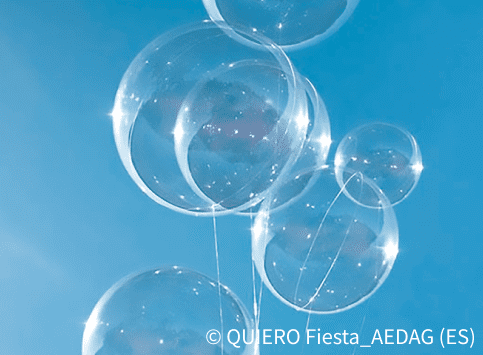
Move the balloon near a window so it catches natural light. Foil balloons and transparent balloons, such as Aqua Balloons™ and Bubble Balloon™, often create beautiful reflections that some babies enjoy watching.
3. Ceiling Dance Trick
Let the balloon float near the ceiling where it can gently move with the air from an air conditioner or natural airflow.
While holding your baby, point to the balloon and encourage them to watch it drift.
4. Color Choice Trick
Once your baby reaches around 4 months of age and begins recognizing colors more clearly, try using balloons in different bright colors to see which attracts their attention.
5. Peek-a-Balloon Trick
Hide the balloon behind your back or another object, then slowly reveal it again—similar to playing peek-a-boo.
6. Mobile-Inspired Balloon Trick
Crib mobiles have long been used to provide gentle visual stimulation as babies’ eyesight develops.
A floating balloon shares some similar characteristics, including slow movement and constantly changing visual patterns, which may briefly capture a baby’s attention.

Is a Balloon just a Decoration?
No, it’s not.
Some of our customers have shared that their babies enjoyed watching our ibrex balloons™ and Bubble Balloon™.
Whether you’re decorating a nursery, celebrating a new baby, or looking for a thoughtful gift from grandparents or relatives, a balloon can bring joy to the occasion—and it may even become something your baby enjoys watching.
We’d love to hear about your experience if you decide to try it!
Conclusion
The balloon trick isn’t a proven way to stop a baby from crying, but it may briefly capture some babies’ attention. If you already have a helium balloon at home, it’s a simple idea worth trying—as long as you keep safety first and continue responding to your baby’s needs.
Every baby is different, so what works for one may not work for another. Enjoy the precious moment with your baby!
FAQ
A: Many babies may begin showing interest in balloons at around 3 months of age, when they become better at focusing on nearby objects and tracking slow movement.
A: Although there is no definitive research, balloons share several characteristics with crib mobiles, including slow movement, bright colors, and changing light reflections, which may naturally attract a baby’s attention.
A: Helium inside a properly inflated balloon is not dangerous when the balloon is used responsibly. However, balloons themselves can pose choking or strangulation hazards, so babies should always be closely supervised around them.
A: Although it’s theoretically possible to lift a person using hundreds of helium balloons, it is extremely dangerous and should never be attempted with a baby or anyone else.
If you’re curious about the science, you can read more here: https://tk-balloons.com/blog/how-many-helium-balloons-are-needed-to-lift-a-person/